
What Is Karmkand? Meaning, Types & Common Hindu Rituals
What Is Karmkand? Meaning, Types & Common Hindu Rituals
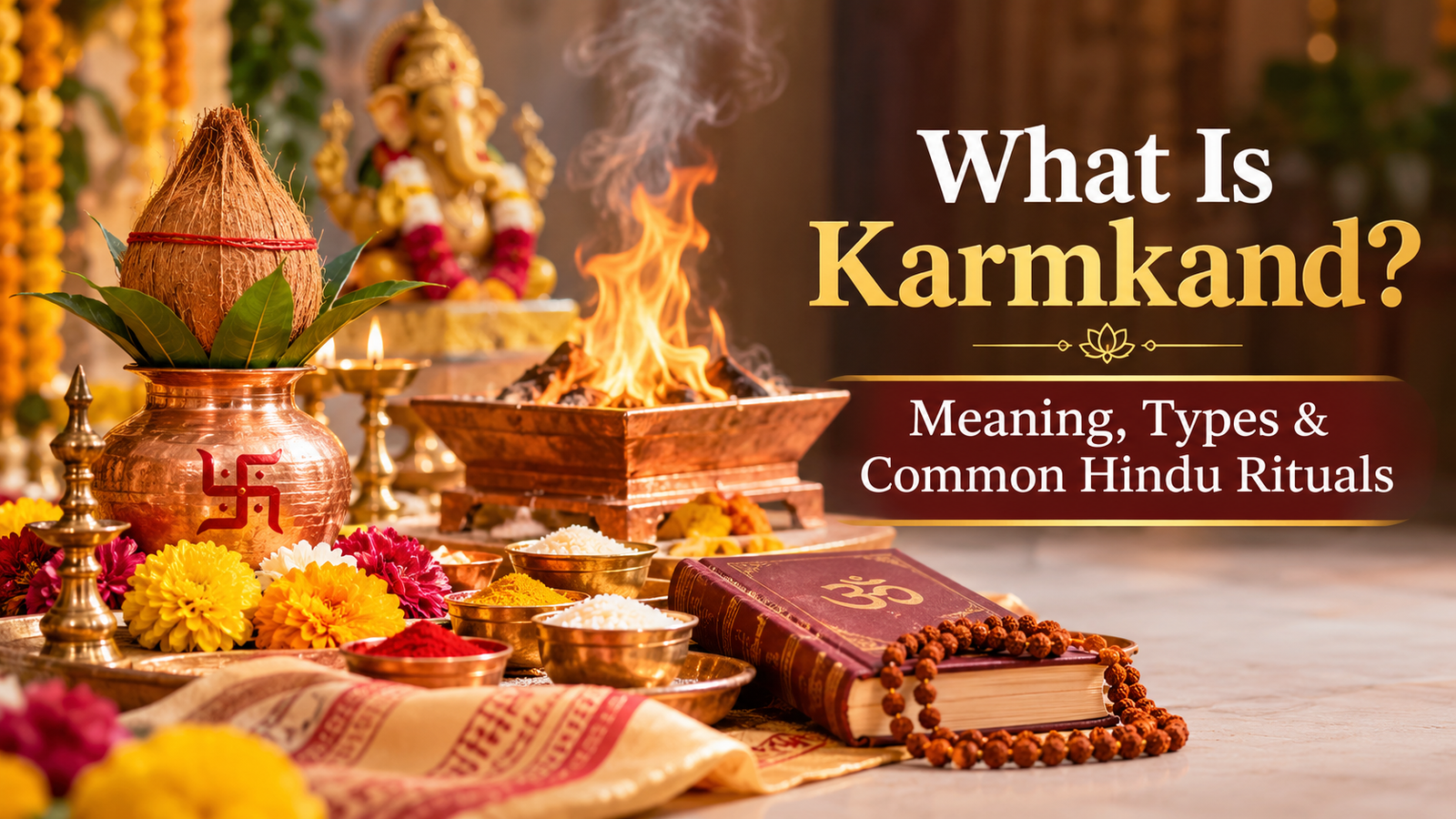
Think about the milestone moments in a Hindu family: entering a novel home, celebrating a baby's naming ceremony, solemnizing a wedding, or remembering an ancestor who has passed away. Virtually every one of these events comes with a sacred ritual.
In addition, even the daily morning prayer at your home altar counts as part of this tradition. Together, all of these devotional actions fall under the broad banner of Karmkand.
However, what does the term actually signify? Why are these ceremonies executed with such specific procedures, and what spiritual purpose do they serve in modern life? In this practical guide, we explore the authentic meaning of Karmkand, its core categories, common Hindu rituals, and when it is beneficial to consult a knowledgeable Pandit.
What Is Karmkand?
Karmkand (also written as Karma Kanda) refers to the ceremonial and liturgical dimension of Vedic tradition. Specifically, the compound derives from two Sanskrit roots: Karma, meaning action or deed, and Kanda, meaning a section or division.
In simple terms, it covers prescribed religious actions: Yagya, Havan, Puja Vidhis, Mantra recitation, and ceremonies performed according to shastric guidelines.
The Vedic Division: Karmakanda vs. Jnanakanda
In traditional discussions of Vedic literature, a distinction is often made between Karmakanda and Jnanakanda. Karmakanda focuses on prescribed religious actions, sacrifices and ceremonies.
On the other hand, Jnanakanda focuses on spiritual knowledge, philosophy and self-inquiry, particularly in the Upanishads. In everyday Hindu practice, Karmkand commonly refers to religious ceremonies performed on different occasions.
Meaning and Significance of Karmkand in Hinduism
For many Hindu households, Karmkand is far more than a rigid set of rules. Rather, it provides devotion with a tangible structure, allowing families to express gratitude, celebrate milestones, and preserve sacred roots.
1. Conveying Devotion and Gratitude
Puja, Stotra chanting, and ceremonial offerings offer a mindful medium to express faith and thank the divine energies sustaining our lives.
2. Marking Important Life Milestones
Additionally, Hindu traditions provide specific ceremonies for childbirth, naming, education, marriage, and ancestral remembrance. Consequently, these rituals invite families to pause and honor major life transitions.
3. Preserving Family Heritage
Moreover, these rituals help preserve family traditions. Observing handed-down family rituals keeps ancient customs alive, helping younger generations connect with their cultural roots.
4. Strengthening Community Connections
As a result, these practices remain an important part of family traditions. Major ceremonies bring relatives and community members together, building shared warmth and connection.
5. Fostering Spiritual Discipline
Furthermore, daily sandhya prayers, regular fasting, and silent Japa develop personal focus, emotional resilience, and steady inner peace.
Difference Between Karma and Karmkand
Although both terms sound alike and share the same root, they don't mean the same thing:
| Basis | Karma | Karmkand |
|---|---|---|
| Core Meaning | Actions, intentions, and their natural consequences | Prescribed religious rituals and consecrated ceremonies |
| Operational Scope | Applies universally to all everyday thoughts and actions | Focuses specifically on defined spiritual procedures |
| Practical Examples | Honesty, fulfilling duties, selfless service, compassion | Puja, Havan, Yagya, and Vedic Sanskara ceremonies |
| Philosophical Nature | A universal moral law of cause and effect | A structured ceremonial discipline within tradition |
In simple words, Karma is about actions and their consequences, while Karmkand is about specific religious actions and ceremonies performed in a traditional way.
What Is the Purpose of Karmkand?
The purpose depends on the occasion and the ritual. However, some reasons come up again and again:
- Worship and gratitude: Showing devotion to deities and saying thank you.
- Seeking blessings: Praying for peace, health, prosperity and wellbeing.
- Honoring ancestors: Performing rites such as Shradh and Tarpan.
- Sanctifying large occasions: Conducting ceremonies for marriage, childbirth and a new home.
- Spiritual discipline: Practising prayer, Mantra recitation and other devotional activities.
Different Types and Forms of Karma
In Hindu philosophy and ritual traditions, actions are often grouped into four categories: Nitya, Naimittika, Kamya and Prayaschitta. They help explain different kinds of duties and rituals:
1. Nitya Karma – Daily Religious Duties
These are the regular duties done as part of a daily spiritual routine. Examples include morning prayers, Sandhya Vandana, lighting a diya, reciting Mantras, and offering water to the Sun.
2. Naimittika Karma – Occasional Duties
Additionally, some ceremonies are performed on specific occasions or dates. Examples include festival observances, eclipses, special Vrat Tithis, and major family milestones.
3. Kamya Karma – Actions with a Specific Desire
For instance, a person might perform these while seeking blessings for family peace, success in a novel venture, prosperity, or personal growth. They are optional and depend on individual faith.
4. Prayaschitta Karma – Atonement Practices
Prayaschitta is about repentance and making amends through prayer, charity, and fasting. At its heart, it's about reflection and a commitment to improved conduct, not fear.
Common Karmkand Rituals in Hinduism
Hindu traditions include many rituals, each for a diverse occasion. Here are some of the most frequent ones:
1. Puja and Archana
Puja is worship in which devotees offer prayers and traditional offerings such as flowers, incense, a diya, fruits, and naivedya. Archana normally means chanting a deity's names or specific Mantras while making offerings.
2. Havan and Yagya
Havan is a sacred fire ritual wherein consecrated offerings like pure ghee and samagri are offered into the Agni while Mantras are recited. A Yagya represents an elaborate, structured Vedic ceremony designed for collective spiritual well-being.
3. Japa and Mantra Recitation
In addition, Mantra recitation is part of many rituals. Japa means repeating a Mantra using a Mala. Because Vedic Mantras require precise phonetic pronunciation, beginners usually learn from a teacher or Pandit first.
4. The 16 Sanskaras (Life-Cycle Ceremonies)
Similarly, other Sanskaras mark important stages of life. Notable ceremonies include Namakarana (naming), Annaprashana (first food), Mundan (hair-cutting), Upanayana (sacred thread), Vivah (wedding), and Antyeshti (last rites).
5. Shradh and Pitru Karmas
Shradh and Pitru Karmas are rites to remember and honour ancestors who have passed away through Tarpan and Pind Daan, especially during Pitru Paksha.
6. Griha Pravesh Puja
For example, Griha Pravesh is performed when entering a new home. It may include Ganesh Puja, Vastu-related worship, and Havan. If you are planning this for a new home, our guide on Vastu Shastra for interior design may also help.
Importance of a Pandit
Many ceremonies involve specific Mantras, sequences, offerings, and phases. Therefore, families often consult a knowledgeable Pandit to help them understand and perform the ritual properly.
- Vidhi: Explaining and conducting the ritual procedure.
- Mantra recitation: Guiding the proper recitation and pronunciation.
- Muhurat: Suggesting an auspicious timeframe based on the Panchang.
- Samagri: Giving you a clear itemized list of materials needed.
- Traditional guidance: Helping you understand the customs for your occasion.
How to Prepare for a Karmkand Ceremony
A little planning makes the ceremony smoother for everyone. Here is a simple way to go about it:
- Decide the goal: Is it a Puja, Havan, Sanskara, Shradh, or Griha Pravesh?
- Talk to a knowledgeable Pandit: Discuss the ceremony, its procedure, and your family customs.
- Verify the date and Muhurat: If the ceremony needs an exact Muhurat, sort it out early.
- Organize the Samagri: Ask for a clear list of materials such as flowers, fruits, ghee, rice, and incense.
- Prepare the space: Clean the area and arrange comfortable seating.
- Explain costs: Talk about Dakshina, Samagri expenses, and arrangements beforehand.
Frequently Asked Questions
Consult Shastri Shree Ashishbhai for Karmkand Guidance
Planning a Puja, Havan, Griha Pravesh, ancestral Shradh, or family Sanskara? Understanding the procedure and preparations before the day arrives brings lasting clarity.
Shastri Shree Ashishbhai provides guidance for religious and traditional practices. If you need help understanding a ceremony, its Vidhi, Muhurat, or Samagri, explore our dedicated Pooja Vidhi and Karmkand services or book a personalized astrology consultation in Ahmedabad.
 Previous Post
 Next Post


